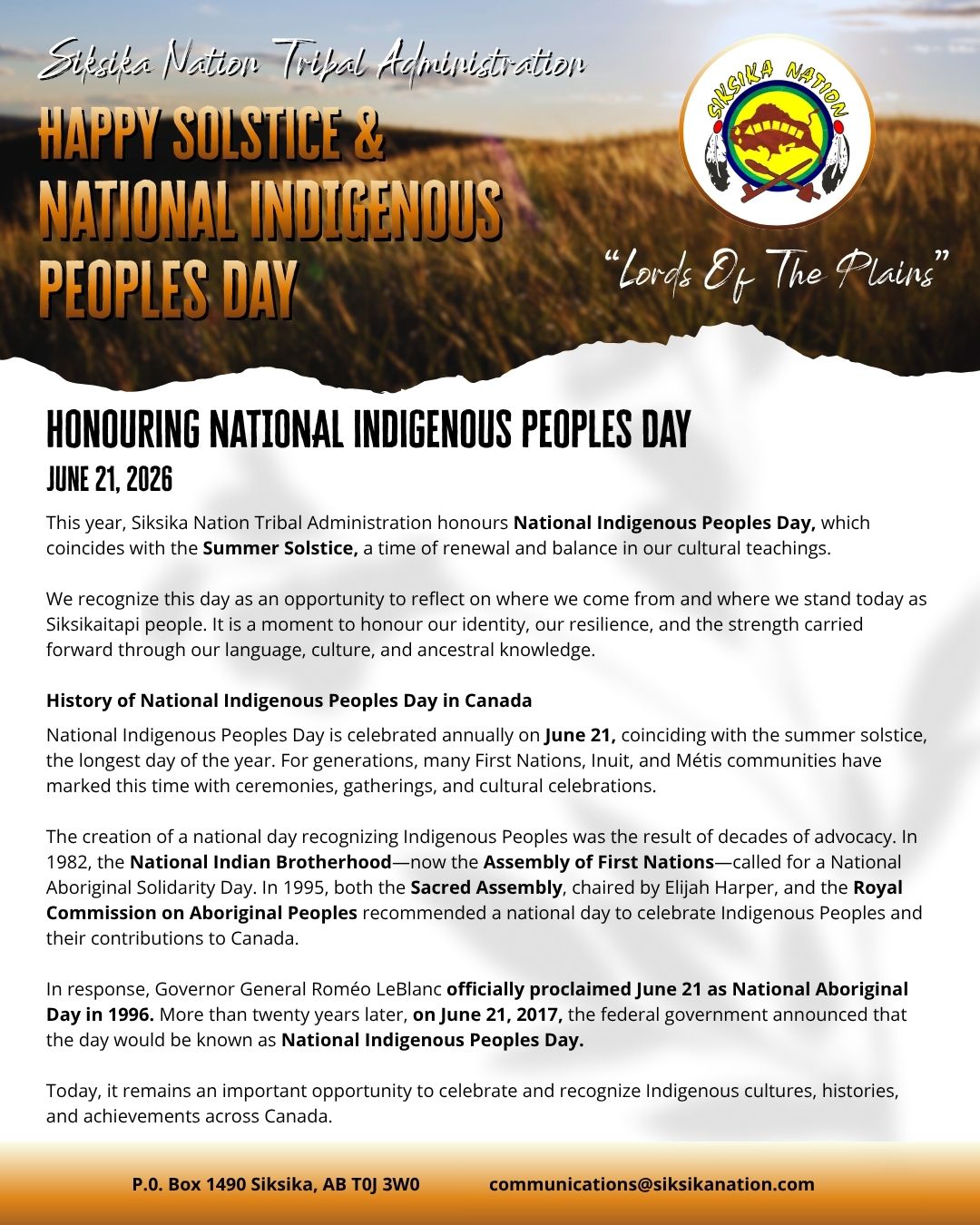
This year, Siksika Nation Tribal Administration honours National Indigenous Peoples Day, which coincides with the Summer Solstice, a time of renewal and balance in our cultural teachings.
We recognize this day as an opportunity to reflect on where we come from and where we stand today as Siksikaitapi people. It is a moment to honour our identity, our resilience, and the strength carried forward through our language, culture, and ancestral knowledge.
History of National Indigenous Peoples Day in Canada
National Indigenous Peoples Day is celebrated annually on June 21, coinciding with the summer solstice, the longest day of the year. For generations, many First Nations, Inuit, and Métis communities have marked this time with ceremonies, gatherings, and cultural celebrations.
The creation of a national day recognizing Indigenous Peoples was the result of decades of advocacy. In 1982, the National Indian Brotherhood—now the Assembly of First Nations—called for a National Aboriginal Solidarity Day. In 1995, both the Sacred Assembly, chaired by Elijah Harper, and the Royal Commission on Aboriginal Peoples recommended a national day to celebrate Indigenous Peoples and their contributions to Canada.
In response, Governor General Roméo LeBlanc officially proclaimed June 21 as National Aboriginal Day in 1996. More than twenty years later, on June 21, 2017, the federal government announced that the day would be known as National Indigenous Peoples Day (Government of Canada).
Today, it remains an important opportunity to celebrate and recognize Indigenous cultures, histories, and achievements across Canada.
Kiitakitamaatsin!